Plants differ from decorative objects added to an interior; they grow towards the light and gradually transform the character of the space they inhabit.
Greenery gathered near a window becomes an interior landscape shaped by daylight. Yet this living and tranquil atmosphere can also be recreated in areas where natural light is limited.
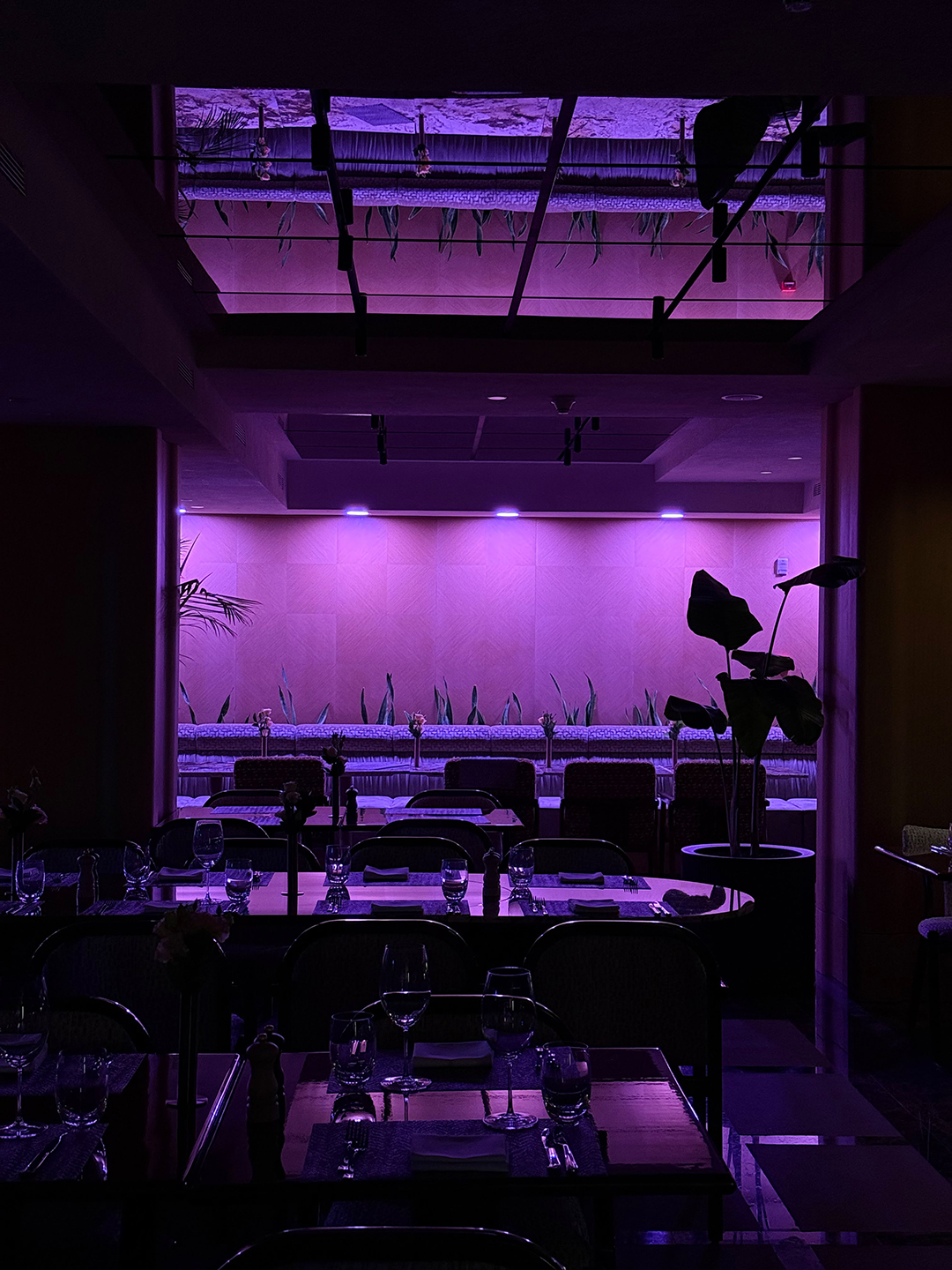
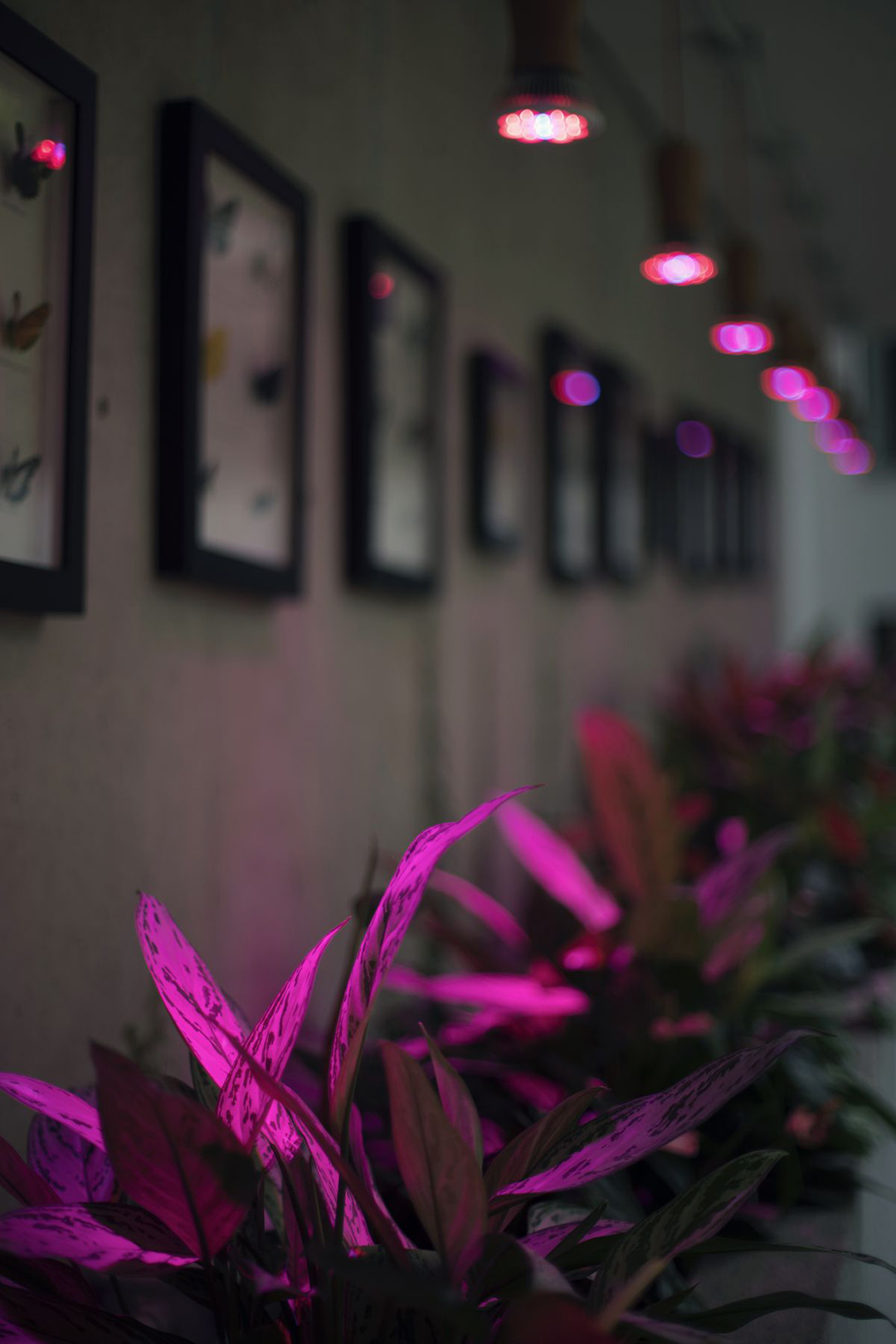
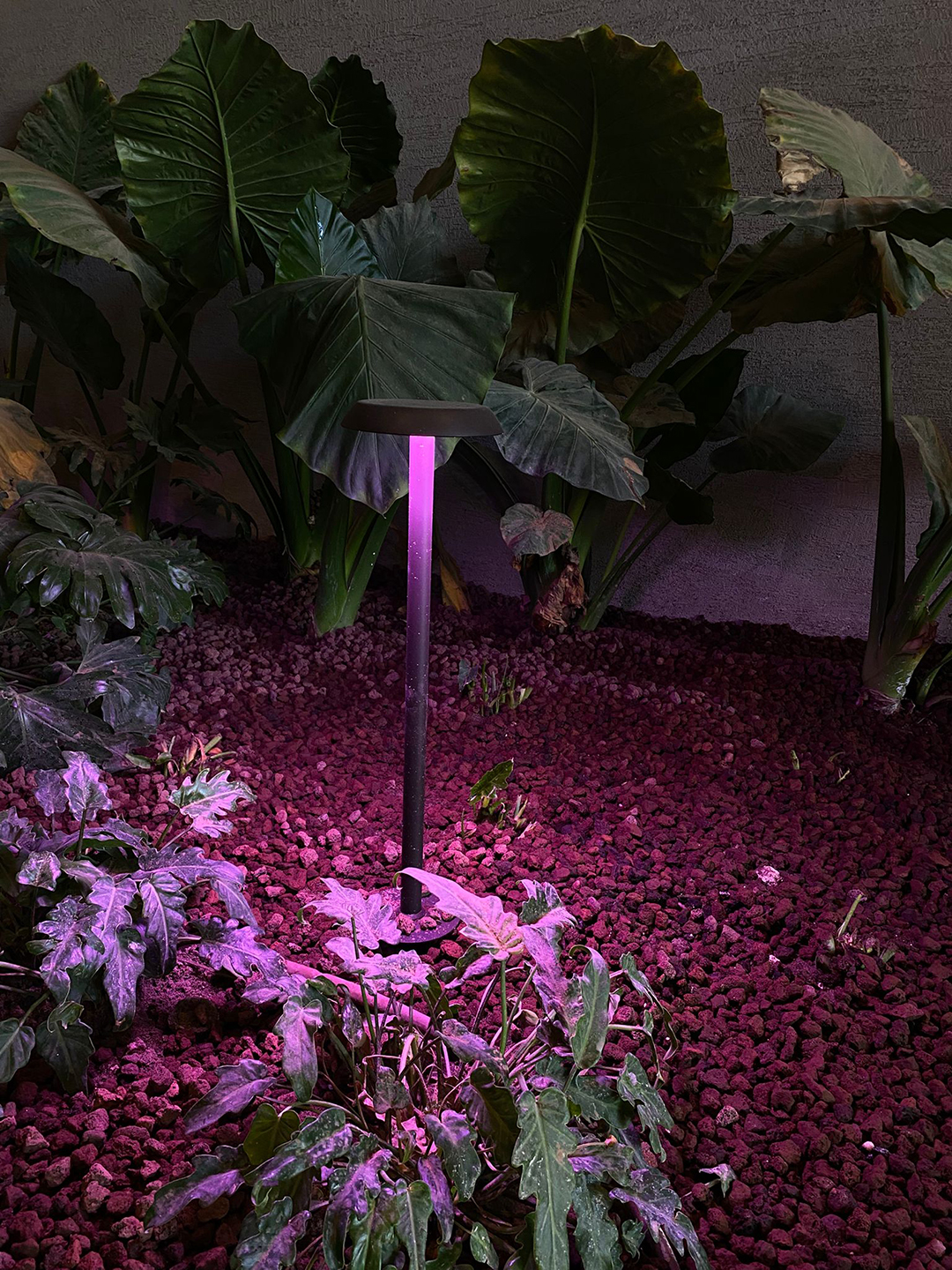
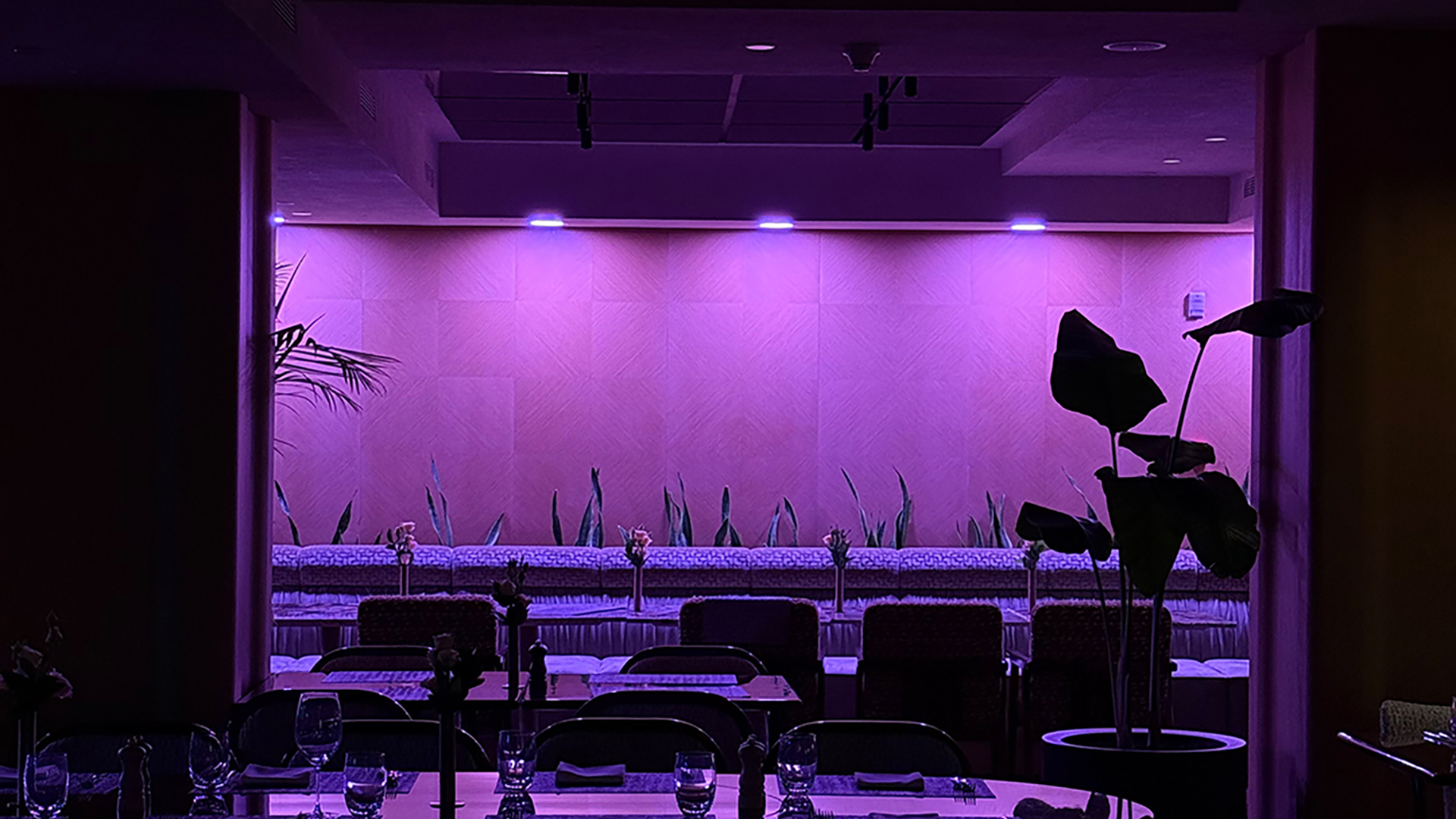
At this point, grow lights move beyond being a purely technical solution that supports plant growth and become a new layer of light within the atmosphere of the space. Directed light placed among the plants illuminates areas beyond the reach of daylight, while its purple and blue tones give the corner a distinctive character. In this way, plants cease to be merely decorative elements and become a living part of the interior whose presence is felt throughout the day.
To create a warm and inviting atmosphere in interiors, lighting within the 2700K–3000K range is generally preferred. Grow lights, however, may use different colours of light to support plant development. Even so, when positioned correctly, they do not necessarily create a harsh or uncomfortable appearance. Light filtering through the leaves, the resulting shadows and the purple reflections appearing on glass surfaces create a more layered atmosphere, distinct from conventional warm-white lighting.
The key consideration here is not the use of grow lights on their own, but how they relate to the overall lighting scheme of the space. Directing the light at the right angle and balancing it with the surrounding warm-toned illumination reduces the dominance of purple and blue hues, resulting in a more cohesive appearance. In this way, the natural and vibrant atmosphere formed by daylight near a window can be reinterpreted in a corner of a home, café or another interior located away from natural light.
Within this approach, light is more than a tool that enables vision. Passing through the plants, it reveals leaves, surfaces and shadows while simultaneously shaping the perception of the space. Rather than imitating daylight, this new form of illumination recreates the feeling that natural light leaves within a space in a different way.
Used in this way, grow lighting is no longer merely a technical necessity. While supporting plant life, it also makes the relationship between light and shadow within the interior visible. It becomes a distinctive spatial experience in which nature and technology share the same atmosphere—living, evolving and transforming over time.