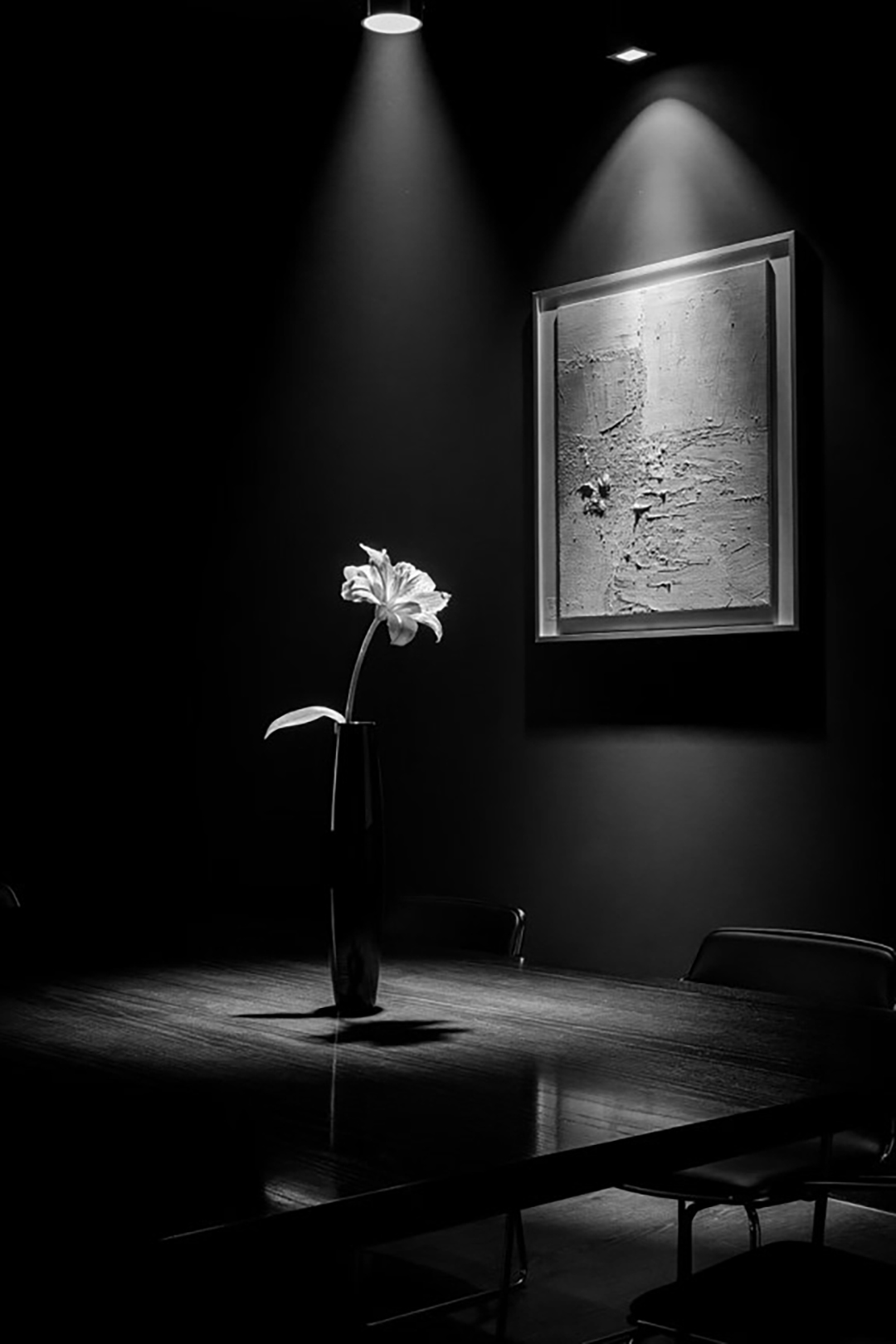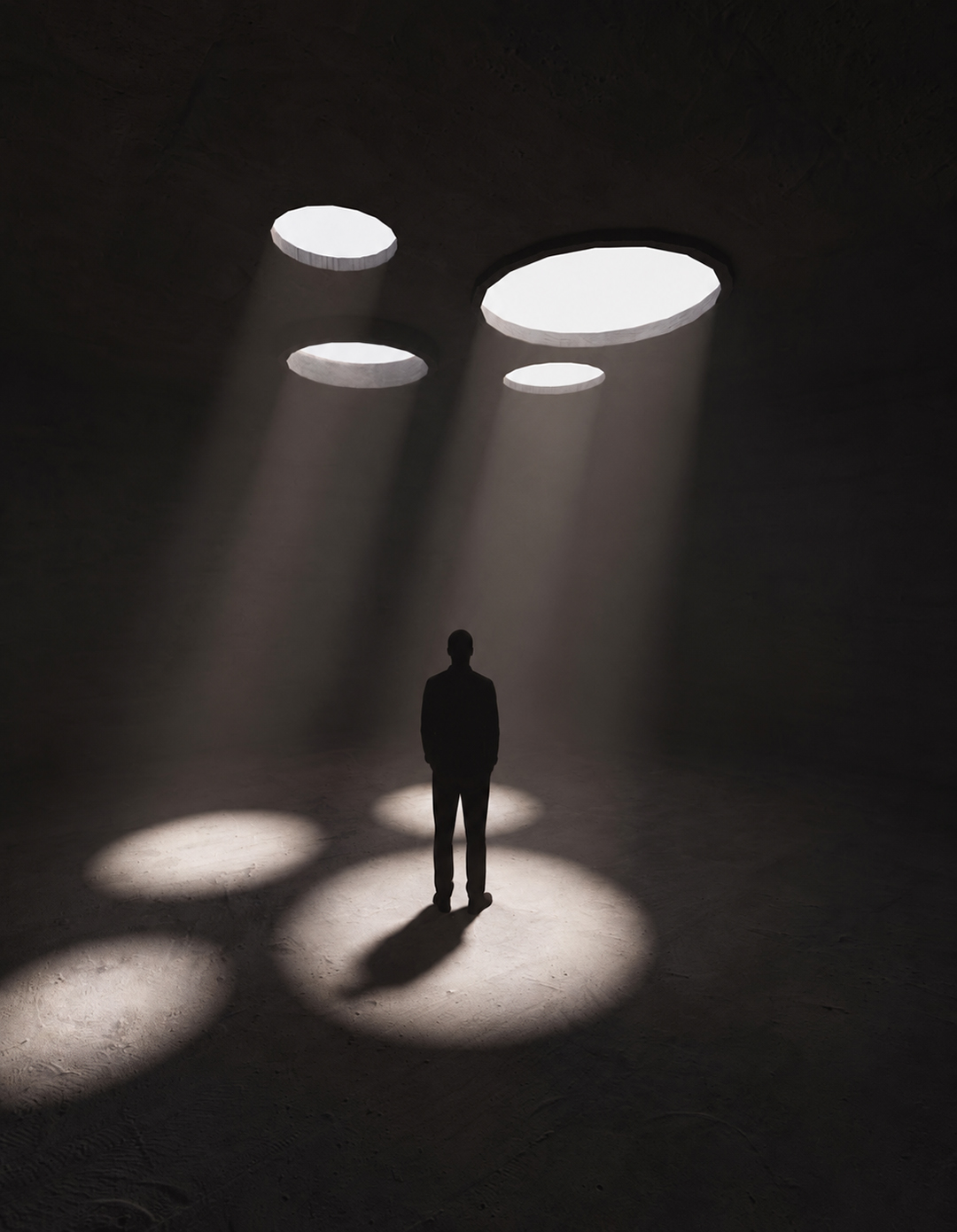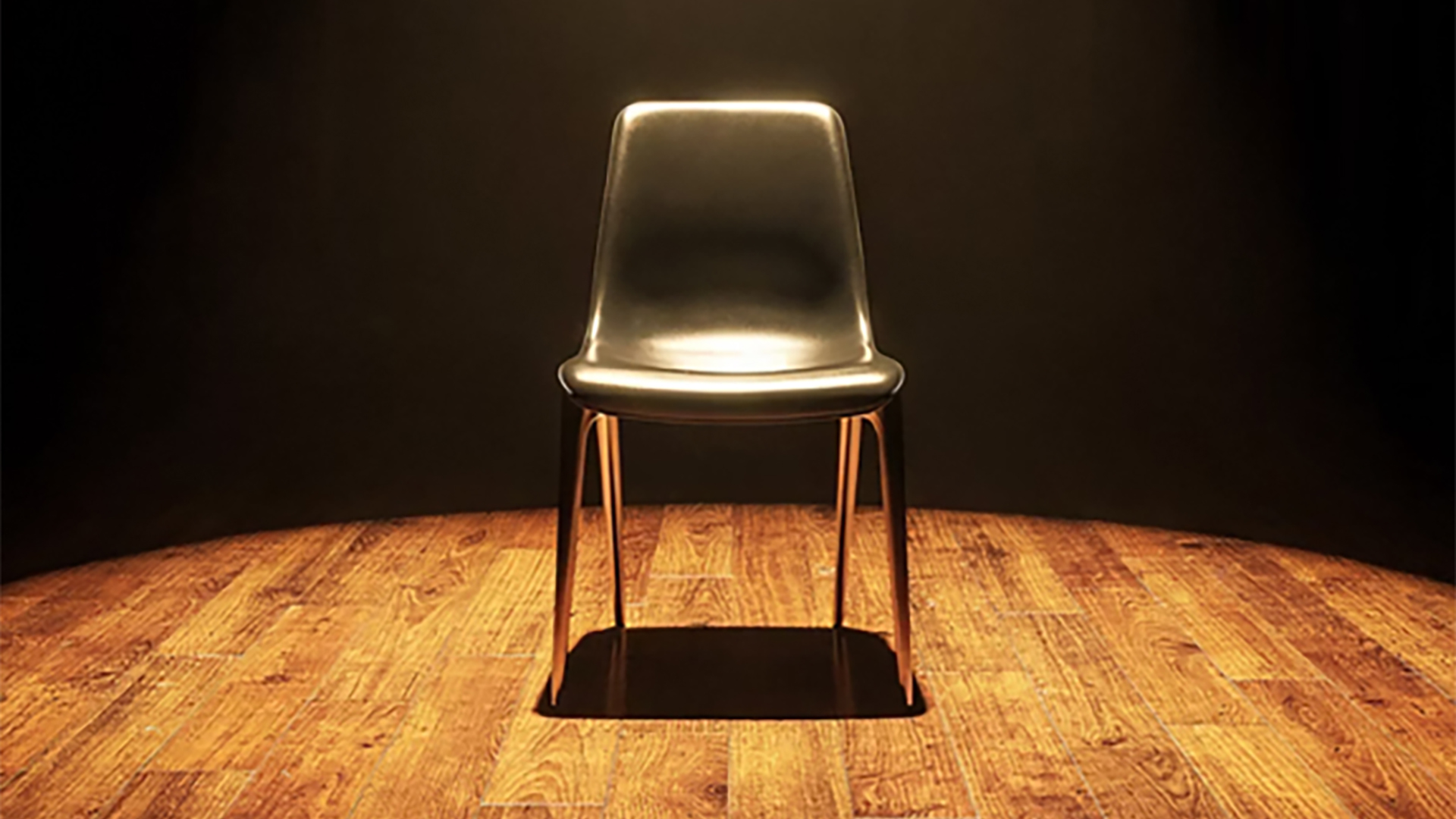
Darkness is not the absence of light; it is a spatial condition that defines its boundaries.
Illuminating a space does not necessarily mean making all its boundaries visible. Sometimes allowing a surface to recede, leaving a void undefined or keeping a transition in darkness becomes a deliberate design decision that strengthens spatial perception. At this point, darkness ceases to be a passive consequence of lighting design and becomes an active component of it.
While light defines space, darkness reinterprets its boundaries. The contrast between light and darkness determines the legibility of surfaces, spatial depth and visual hierarchy. Not only the area reached by a light source, but also the area beyond its reach, forms part of the design.
Darkness can therefore be understood as a threshold. It creates an interface between what is visible and what remains concealed, between what is defined and what is left uncertain. It directs the user’s gaze, slows their movement and invites them to experience the space gradually rather than revealing it all at once.
A surface that remains in darkness carries as much meaning as one illuminated by light. The effect of light can only be understood in relation to the darkness surrounding it.
For us, darkness is not an absence, but a design tool. It means designing not only where light begins, but also where it ends. Rather than making a space entirely visible, it establishes a balance between visibility and ambiguity, offering the user not merely a space, but a spatial experience that shifts in perception through the interplay of light and shadow.
Because sometimes, what best describes a space is not what we see, but what we expect to see.